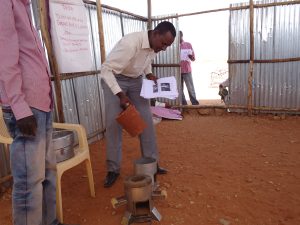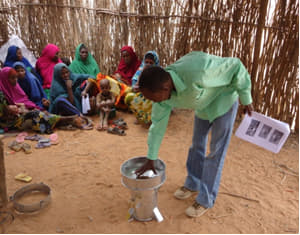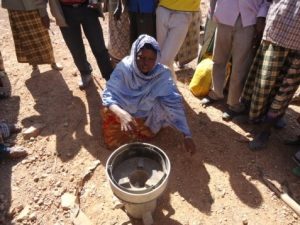
Partnership for Pastoralist Development Association (PAPDA), with support from various donors, including UN agencies and local communities, has been implementing sustainable energy solutions for low-income households in the Oromia region’s Guji zone and the Somali region’s Liban zone. This initiative addresses energy access and environmental protection through the distribution of fuel-efficient, wood-saving stoves, which ease the burden on women and girls who often travel long distances to gather firewood.
These stoves are produced by self-help groups organized from community beneficiaries who have been trained by PAPDA. To empower these groups, PAPDA provides initial capital and the necessary raw materials for stove production. This approach not only reduces firewood dependence—contributing to the conservation of local forests and shrublands—but also generates income for the participants, who can sell the stoves within their communities.
In addition to production support, PAPDA conducts training sessions and awareness campaigns to encourage the use of alternative fuels, such as cow dung and agricultural residues. These fuels are both cost-effective and sustainable, allowing communities to further minimize environmental impact. This shift to renewable fuel sources reduces deforestation, helps maintain biodiversity, and conserves local ecosystems.
Furthermore, this initiative actively contributes to combating climate change. By reducing the demand for firewood and introducing cleaner fuel options, the project decreases carbon emissions associated with traditional cooking methods, supporting both regional and global climate goals. PAPDA’s efforts to promote sustainable energy in Guji and Liban zones aim to expand the project’s impact, inspiring other communities to adopt these practices and further advancing environmental resilience, economic empowerment, and climate action in Ethiopia.
In partnership with UNHCR, PAPDA has also provided solar lamps to internally displaced persons (IDPs) in Kersadule Woreda. These solar lamps supply clean, reliable lighting for households, enabling children to study after dark and improving overall safety. Access to lighting helps reduce incidents of violence in the community by illuminating public and private spaces, offering a safer environment, especially for women and children. This intervention not only supports educational opportunities for school students but also contributes to community resilience, enhancing security and quality of life for displaced families.